Privacy
Why passwords, personal details and photos should be protected — and who to tell if something feels wrong.

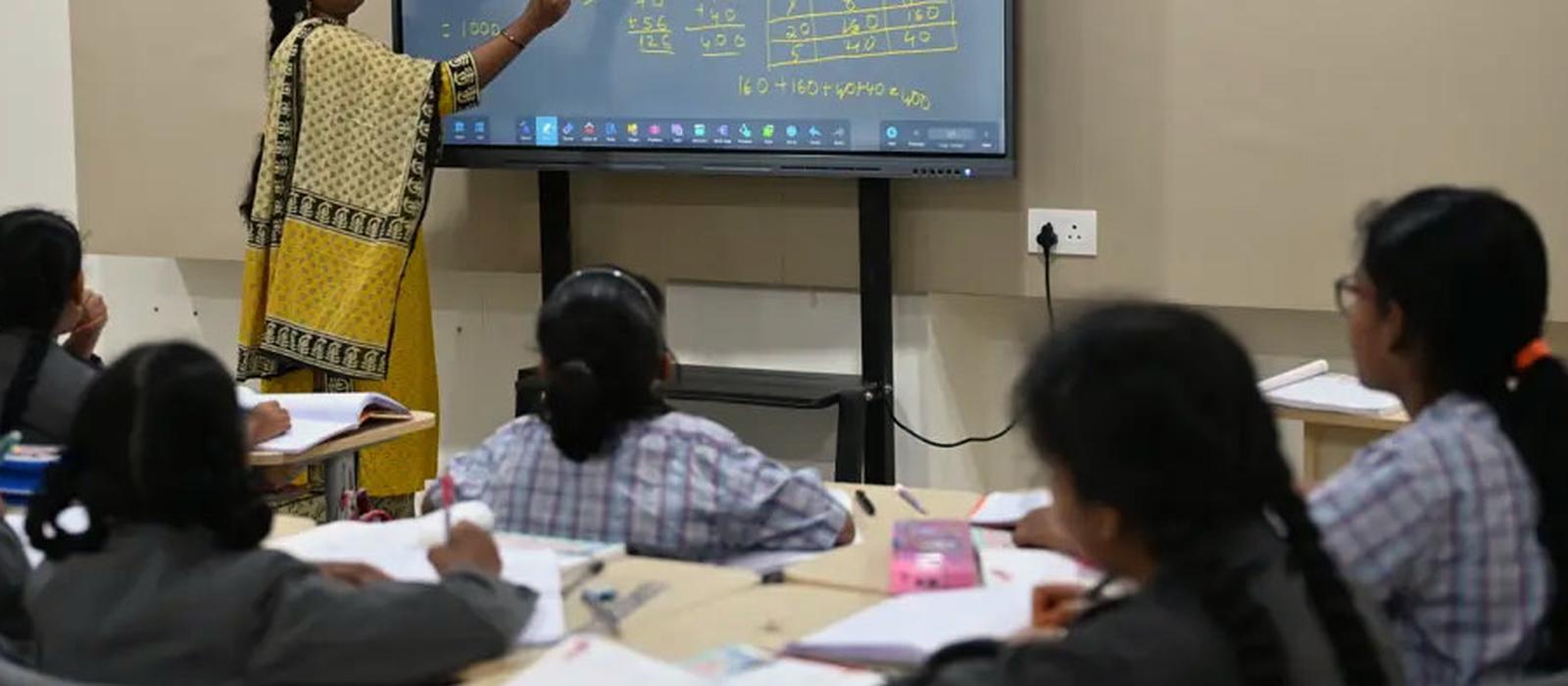
Interactive panels, digital resources and computer education help children see, explore and create — always with the teacher, and the idea, at the centre.
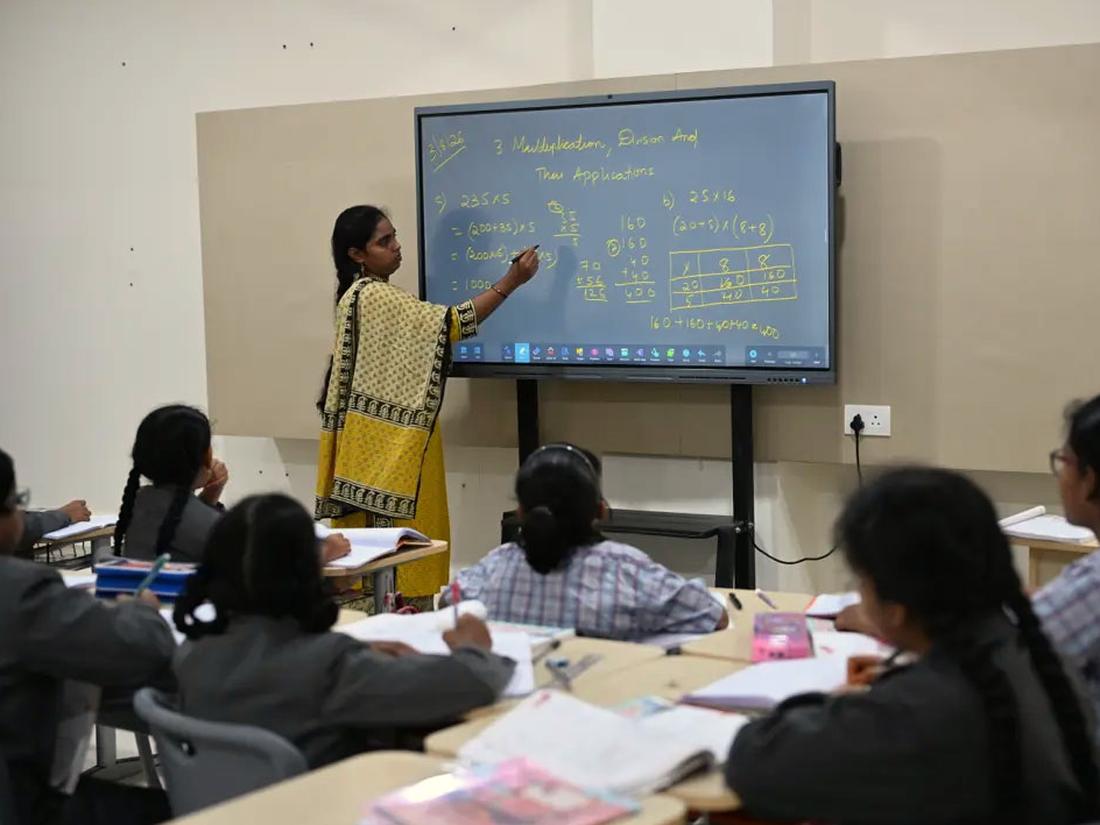
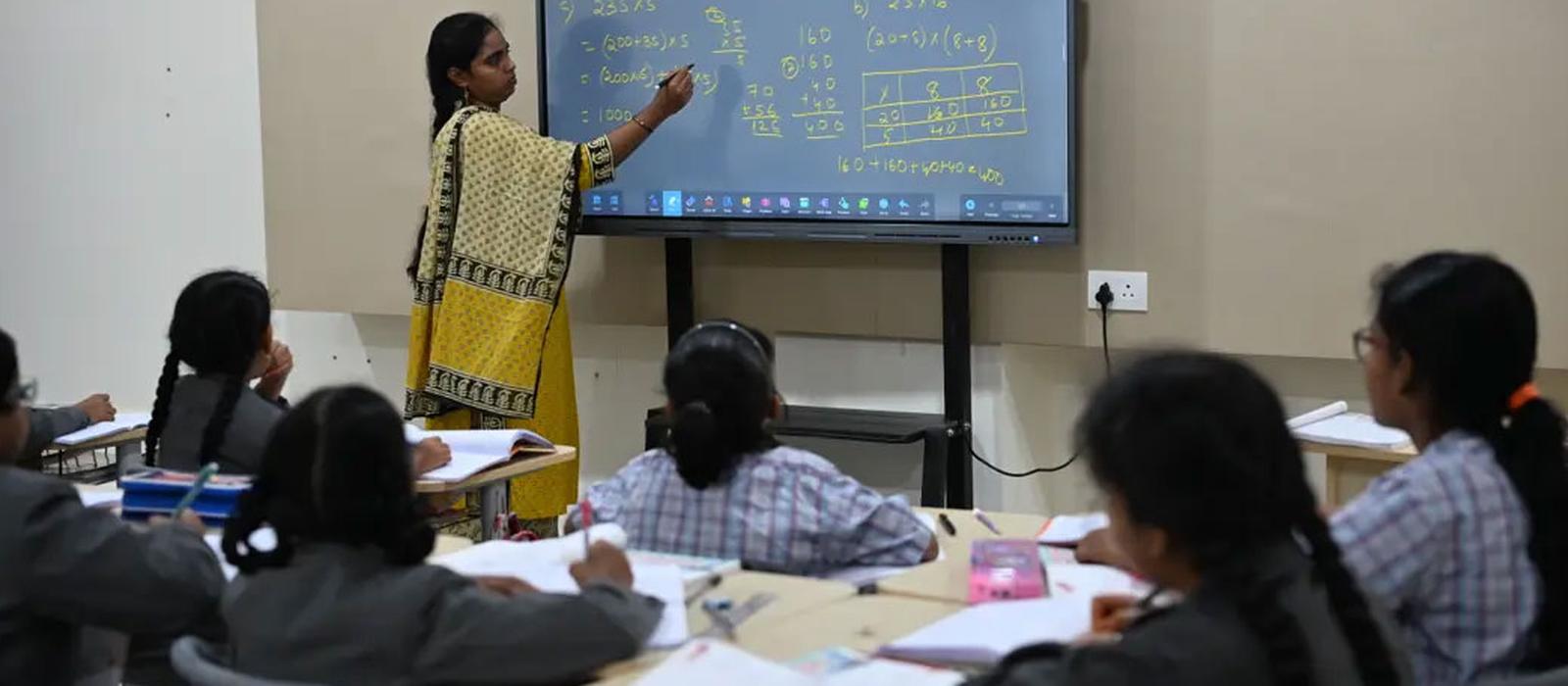
Interactive panels let teachers display diagrams, annotate worked examples, run simulations, show short video clips and collect quick answers from the class. A science teacher can show the stages of a plant’s growth; a maths teacher can drag and rotate shapes; an English teacher can highlight how a paragraph is built.
We use technology deliberately: when a visual or simulation makes an idea clearer, not simply to fill time. Most of a lesson is still explanation, discussion and practice — the things that build lasting understanding.
Limited, teacher-led screen use for songs, stories and visual learning on the class panel. The emphasis remains on hands-on play, conversation and outdoor activity.
Children learn the parts of a computer, mouse and keyboard skills, drawing and word-processing tools, and simple, safe internet habits.
Students use productivity tools for projects, learn how the internet works, practise research and citation, and begin programming with block-based and introductory text-based languages.
Children are growing up online. We teach them how to protect themselves and treat others well.
Why passwords, personal details and photos should be protected — and who to tell if something feels wrong.
Recognising and refusing cyberbullying; thinking before posting or sharing.
How to tell reliable information from rumours, advertisements and fake news.
Screen-time habits, posture, eye care and the importance of sleep and outdoor play.
Personal devices are not used in class. Digital learning happens through teacher-led interactive panels and supervised computer-lab sessions.
Very little. In the early years, screens are used briefly and purposefully by the teacher; most learning is hands-on.
Yes. Logical thinking and block-based coding begin in primary, with more structured programming in middle school.
Agree family rules, keep devices out of bedrooms at night and co-view content with younger children. Our blog post on healthy routines has more ideas.

A campus visit is the clearest way to understand how our classrooms work, how teachers speak with children and whether Arkaas is the right fit for your family.